
Why Shopify Headless Commerce is Worth the Investment in 2026
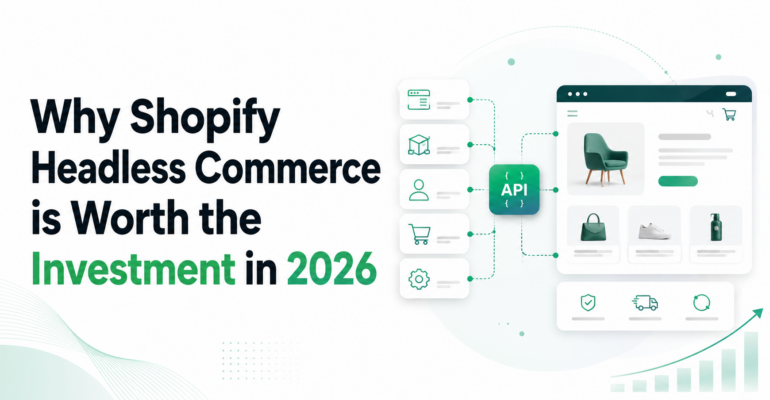
Why Shopify Headless Commerce is Worth the Investment in 2026
 Brainiuminfotech
 For ecommerce brands planning serious growth in 2026, Shopify headless commerce has shifted from being a niche technical experiment to a strategic business decision. As digital storefronts increasingly compete on speed, personalization, omnichannel consistency, and SEO performance, more brands are evaluating whether Shopify’s traditional theme architecture can continue supporting long-term expansion.
For the right business, Shopify headless commerce can absolutely justify its higher investment.
The key is understanding that headless is not simply a design upgrade. It is infrastructure. By separating Shopify’s backend commerce engine from the frontend customer experience, brands gain greater control over performance, customer journeys, international scaling, and future commerce innovation. With Shopify’s Hydrogen and Oxygen ecosystem significantly reducing historical technical barriers, headless commerce is becoming more commercially viable than ever.
However, headless is not universally beneficial. Its value depends on business maturity, operational complexity, and revenue goals. For brands seeking higher conversion potential, stronger SEO flexibility, and enterprise-grade scalability, Shopify headless commerce can deliver measurable long-term ROI. For smaller brands, it may create unnecessary technical overhead.
In short, Shopify headless commerce is worth the investment in 2026 when growth demands flexibility that traditional storefronts cannot efficiently deliver.
The Real Cost of Shopify Headless Commerce in 2026: Development, Infrastructure, and Maintenance
One of the most important considerations for any business evaluating Shopify headless is total cost of ownership.
Headless storefronts typically require larger upfront investment than standard Shopify builds because businesses are funding:
- Custom frontend development
- API integrations
- CMS implementation
- Advanced testing
- Long-term technical support
This often makes initial project costs significantly higher than traditional Shopify themes.
Yet focusing only on launch cost can be misleading.
Shopify’s own ecosystem has matured considerably. Hydrogen, Shopify’s React-based framework, simplifies storefront development, while Oxygen provides globally distributed hosting optimized for Shopify commerce. Together, these reduce infrastructure burdens that previously made headless far more expensive.
For brands with larger catalogs, multiple markets, or advanced UX requirements, this changes the financial equation.
| Traditional Shopify | Shopify Headless |
| Lower initial investmentFaster deploymentLower maintenanceSimpler operations | Higher upfront investmentGreater development complexityImproved scalabilityMore customization freedomStronger performance potential |
For many scaling brands, the question is no longer whether headless costs more initially (it does), but whether the increased flexibility and performance can generate stronger returns over time.
H2: Shopify Themes vs Headless Commerce: Which Delivers Better Long-Term ROI?
ROI should not be measured by development costs alone.
Traditional Shopify themes remain highly effective for businesses prioritizing:
- Speed to launch
- Operational simplicity
- Lower budgets
- Manageable storefront complexity
For many small businesses, themes remain the financially superior option.
However, long-term growth often introduces limitations:
- Slower frontend flexibility
- App bloat
- Constrained SEO architecture
- Reduced personalization
- Harder experimentation
This is where headless becomes compelling.
According to Shopify’s April 2026 performance study, every 100 milliseconds of slower load time correlates with roughly a 3.5% decrease in conversion rate across Shopify stores. Shopify also found that stores with a 2.5-second Largest Contentful Paint experienced roughly 30% lower conversion than stores loading at 1.5 seconds.
For high-volume stores, these performance gains can translate directly into significant revenue growth.
Headless ROI often becomes stronger when businesses need:
- International storefronts
- Advanced SEO control
- Personalized customer journeys
- Omnichannel infrastructure
- Faster experimentation cycles
For brands operating at scale, headless commerce often becomes less about frontend preference and more about profit optimization.
How Hydrogen and Oxygen Are Lowering the Total Cost of Shopify Headless Builds
Historically, one of headless commerce’s greatest barriers was complexity.
Brands often needed:
- Custom React frameworks
- External hosting
- DevOps teams
- Performance engineering
- Fragmented commerce architecture
This made headless practical mainly for enterprise organizations.
In 2026, Shopify’s Hydrogen and Oxygen have changed this significantly.
Hydrogen:
Hydrogen is Shopify’s native React framework built specifically for commerce storefronts. It accelerates development through:
- Prebuilt commerce components
- Native Shopify integrations
- Storefront optimization tools
- Faster deployment workflows
Oxygen:
Oxygen provides Shopify-native global hosting infrastructure, reducing:
- Hosting costs
- DevOps overhead
- Deployment complexity
- Performance management burdens
This integrated ecosystem lowers technical friction and reduces total implementation complexity, making Shopify headless increasingly accessible to mid-market brands and not just enterprise players.
For businesses considering headless, this shift is one of the most important developments of 2026.
How Headless Shopify Improves SEO, Conversion Rates, and Customer Experience
Site speed is often the headline advantage of Shopify headless commerce, but for serious ecommerce operators, speed alone rarely justifies the investment. The more meaningful value lies in how headless architecture fundamentally changes a brand’s ability to control search performance, customer journeys, and digital scalability.
From an SEO perspective, headless storefronts provide significantly greater technical flexibility than standard Shopify themes. Businesses gain more precise control over page rendering strategies, structured data implementation, metadata frameworks, and site architecture. This matters because modern search performance is increasingly shaped by technical execution, particularly Core Web Vitals, mobile responsiveness, and crawl efficiency.
For brands operating in highly competitive categories, even small improvements in technical SEO can materially impact visibility. Headless storefronts make it easier to optimize:
- Custom schema markup
- Page speed architecture
- Mobile-first rendering
- Advanced international SEO structures
- Content deployment flexibility
This level of control becomes especially valuable for brands managing large product catalogs, multilingual experiences, or aggressive content marketing strategies.
Conversion optimization is equally important. Traditional Shopify themes can restrict how deeply brands personalize shopping journeys, test UX changes, or optimize merchandising. Headless storefronts allow for more sophisticated frontend experimentation, enabling businesses to design customer experiences around behavior rather than platform limitations.
This can include:
- Personalized product recommendations
- Advanced merchandising logic
- Dynamic content delivery
- Friction-reduced mobile experiences
- Segmented buyer journeys
For high-growth brands, these capabilities can directly influence conversion rates, retention, and customer lifetime value.
Customer experience may ultimately be where headless delivers the greatest strategic return. As ecommerce increasingly spans web, mobile, social, marketplaces, and emerging AI-driven channels, frontend flexibility becomes essential. Headless commerce supports:
- Omnichannel consistency
- Regional localization
- Future AI integrations
- Differentiated branding
- Scalable UX innovation
In practical terms, Shopify headless often delivers its greatest value not by making a site faster, but by transforming the storefront into a more adaptable growth engine.
When Does Shopify Headless Commerce Become Profitable?
Headless commerce is not automatically profitable simply because it offers superior technology. Its profitability depends entirely on whether a business can operationalize the additional flexibility it provides.
For brands with limited traffic, modest product complexity, or straightforward customer journeys, traditional Shopify themes may continue to offer stronger short-term ROI due to lower costs and operational simplicity.
However, profitability tends to improve substantially when brands reach growth thresholds where platform limitations begin restricting revenue opportunities.
Shopify headless often becomes financially compelling when businesses have:
- Substantial traffic volume
- High customer acquisition costs
- International expansion goals
- Complex merchandising requirements
- Strong internal marketing teams
- Dedicated technical resources
In these scenarios, headless investments are more likely to generate measurable returns through:
- Improved SEO competitiveness
- Conversion rate optimization
- Faster experimentation
- Stronger retention strategies
- Expanded omnichannel capabilities
Industry implementation patterns suggest that brands actively leveraging performance, personalization, and UX improvements may begin seeing ROI within roughly 12–18 months. However, brands that approach headless merely as a design rebuild often struggle to justify the investment.
The key distinction is strategic utilization.
Headless commerce becomes profitable when businesses use its flexibility to drive measurable commercial outcomes, and not when they simply replace an existing storefront without broader operational gains.
What are the Hidden Risks of Shopify Headless Commerce That Can Impact ROI?
Despite its growing accessibility, Shopify headless remains a more complex operational model than traditional storefront architecture.
One of the most common strategic mistakes brands make is assuming headless is inherently superior. In reality, poorly aligned headless implementations can increase costs while reducing operational efficiency.
Key risks include:
- Increased developer dependency
- Higher long-term maintenance costs
- CMS workflow complexity
- Reduced marketing agility
- App integration limitations
- API governance burdens
- Technical debt accumulation
A major challenge is that headless often shifts responsibilities away from Shopify’s relatively simplified ecosystem into more custom infrastructure. Marketing teams may lose some of the ease associated with native Shopify editing, while technical teams inherit greater maintenance responsibilities.
Developer communities frequently note that brands often underestimate:
- Content management challenges
- Deployment governance
- Frontend maintenance
- Versioning complexity
- Internal resource strain
This creates an important reality:
Headless commerce should solve clear business bottlenecks such as scalability, SEO limitations, or customer experience constraints. If those pressures do not meaningfully exist, the operational burden can outweigh the commercial upside.
Headless is most effective when it addresses strategic growth needs.
2026 Commerce Trends Making Shopify Headless More Valuable Than Ever
Several broader ecommerce trends are making headless architecture increasingly relevant in 2026, particularly for brands focused on sustained digital growth.
Perhaps the most important shift is the rise of AI-driven commerce. Personalization engines, predictive merchandising, conversational commerce, and dynamic customer journey orchestration all benefit from frontend environments capable of deeper customization.
Headless architecture also aligns more naturally with the broader movement toward composable commerce, where brands increasingly prioritize modular systems over rigid monolithic platforms.
Key market drivers include:
- AI-powered personalization
- Composable commerce ecosystems
- International scaling demands
- Omnichannel infrastructure
- Performance-centric SEO
- Advanced customer journey orchestration
As search algorithms increasingly prioritize user experience and as consumers demand more seamless cross-channel interactions, storefront flexibility is becoming a larger competitive variable.
For brands planning international growth, multi-channel commerce, personalization maturity, or infrastructure adaptability, headless commerce is increasingly shifting from optional innovation to strategic infrastructure.
In this context, Shopify headless becomes a long-term commerce capability.
Is Shopify Headless Commerce Worth It for Your Brand? Key Decision Factors
Whether Shopify headless commerce is worth the investment ultimately depends on whether your business has outgrown the limitations of traditional Shopify architecture.
For brands prioritizing advanced SEO, international expansion, deeper customization, and long-term digital scalability, headless commerce can provide meaningful strategic advantages. Greater frontend flexibility allows these businesses to improve performance, personalize customer experiences, and support more sophisticated growth strategies.
However, headless is not automatically the right fit for every merchant. Businesses with simpler storefront needs, limited budgets, or minimal technical resources may find that traditional Shopify themes continue to offer stronger cost-efficiency and operational simplicity.
The real value of Shopify headless emerges when platform limitations are actively restricting growth, conversion optimization, or customer experience innovation.
Ultimately, the best decision is not based on trend adoption, but on whether headless commerce directly supports measurable business goals.
Final Thoughts,
In 2026, Shopify headless commerce has evolved from an experimental architectural model into a strategic investment for brands focused on long-term digital growth.
As Shopify’s native headless ecosystem continues to reduce implementation complexity through technologies like Hydrogen and Oxygen, businesses now have greater access to high-performance storefronts, scalable infrastructure, stronger SEO capabilities, and more differentiated customer experiences.
For growth-focused brands, headless commerce can deliver significant commercial advantages, but only when the investment is aligned with genuine business needs, operational scale, and long-term expansion goals.
For businesses evaluating whether Shopify headless commerce supports their broader ecommerce strategy, partnering with an experienced Shopify development company like Brainium can help reduce technical risk while maximizing measurable return on investment.
Frequently Asked Questions
1. Is Shopify headless commerce expensive in 2026?
Yes, Shopify headless commerce typically requires higher upfront investment than traditional Shopify themes due to custom frontend development, integrations, and ongoing technical maintenance. However, Shopify’s Hydrogen and Oxygen ecosystem has significantly reduced historical complexity, making headless more cost-efficient than earlier implementations for growth-focused brands.
2. Does Shopify headless commerce improve SEO?
Yes, Shopify headless commerce can improve SEO by offering greater control over technical optimization, Core Web Vitals, mobile performance, schema markup, and site architecture. This flexibility can help businesses achieve stronger search visibility, particularly in competitive markets where performance and technical SEO are critical.
3. Is Shopify Hydrogen necessary for headless commerce?
Shopify Hydrogen is not mandatory, but it is one of the most efficient frameworks for Shopify headless development. As Shopify’s native React-based framework, Hydrogen simplifies storefront development, reduces technical complexity, and accelerates deployment compared to building fully custom headless solutions.
4. How long does Shopify headless commerce take to implement?
Most Shopify headless implementations take approximately three to six months depending on project complexity, customization requirements, integrations, and business scale. Larger enterprise builds may require longer timelines.
5. Who should invest in Shopify headless commerce?
Shopify headless commerce is typically most valuable for mid-market and enterprise brands that require advanced SEO, international expansion, personalized customer journeys, omnichannel infrastructure, or long-term digital scalability. Businesses with simpler ecommerce needs may achieve stronger short-term ROI through traditional Shopify themes.
6. Is Shopify headless commerce worth it for small businesses?
For many small businesses, traditional Shopify themes may offer better cost-efficiency and faster deployment. Headless commerce generally becomes more worthwhile when operational complexity, growth demands, or customer experience limitations begin to exceed theme capabilities.
7. What is the ROI timeline for Shopify headless commerce?
Many brands begin seeing measurable ROI from Shopify headless commerce within 12 to 18 months when improvements in SEO, conversion optimization, and customer experience directly contribute to revenue growth. ROI timelines vary based on business model, implementation quality, and growth strategy.