AI-Powered Websites in 2026: The New Digital Standard
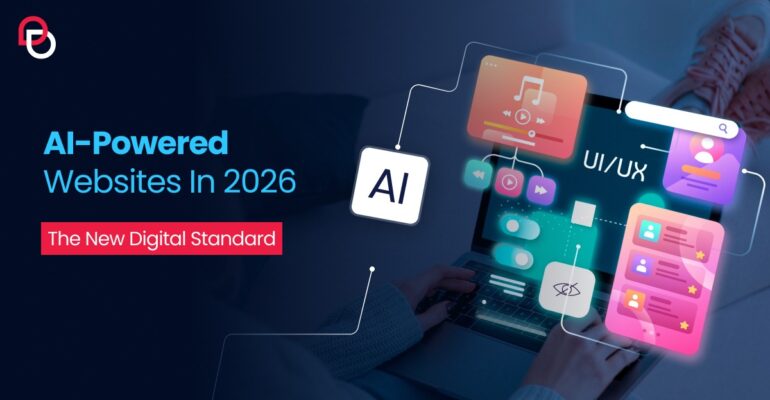
AI-Powered Websites in 2026: The New Digital Standard
 Brainiuminfotech
 In 2026, having a website that just sits there is like having a phone that only makes calls. Sure, it works, but it’s missing the whole point of why anyone even bothers going digital in the first place.
Today’s best websites are like smart digital agents. They learn from visitors, change content on the fly, answer questions before users spell them out, and optimize themselves while teams sleep. This isn’t hype anymore. It’s reality. And if your website still feels like last decade’s brochure page, it’s already playing catch-up.
But what exactly makes a website “AI‑powered”? And why is it now standard instead of luxury? Grab a coffee (or matcha latte, we don’t judge), and let’s unpack it.
What Do We Mean by “AI‑Powered Website”?
When you hear “AI website,” most people think of chatbots. What’s that? It’s that little bubble in the corner where you can ask questions. But that’s just the tip of the iceberg.
A truly AI‑powered website:
- Understands visitors — beyond simple geography or device type.
- Responds intuitively — dynamically changing what each visitor sees.
- Learns and evolves — gets better with every interaction.
Think of it like Spotify. You don’t get the same playlist as everyone else. It’s tailored to your taste. Now imagine that level of personalization on your website.
Behind the scenes, big players like Microsoft, Adobe, Salesforce, Amazon, Google, and IBM are baking AI into their digital platforms. Tools like Microsoft Copilot, Adobe Sensei, Salesforce Einstein, Amazon Personalize, and Google’s AI Search tools are powering experiences that feel less like software and more like smart assistants.
And that’s the point: an AI website doesn’t just exist. It converses, adapts, predicts, and performs.
Why 2026 Feels Like the “Now or Never” Moment
AI isn’t brand new. But three trends make 2026 the turning point:
1. Users Have Zero Patience
We’ve all been trained by apps that just work. Swipe, scroll, click, done. If your website makes people hunt for information, they won’t stay. They’ll bounce. And likely never come back.
This is especially true for Gen Z and younger audiences who expect instant relevance. They don’t want menus. They want answers. And that too, instantly. Even a second of waiting feels too long.
2. AI Stopped Being a “Toy” and Became a “Teammate”
Platforms from big tech don’t just include AI features anymore. They rely on them. Microsoft Copilot suggests page copy and design tweaks. Adobe Sensei personalizes experiences at scale. Salesforce Einstein predicts the next best action for customers.
AI is no longer something you test. It’s something you build with.
3. Personalization is Table Stakes
Not long ago, “Hi, [First Name]” was considered personalization. Now, personalization means delivering totally unique experiences — the kind that feel handcrafted for each visitor.
And that requires AI.
What AI‑Powered Websites Do That Static Ones Can’t
Here’s where the rubber hits the road. Let’s walk through what AI actually does that makes a website smarter:
Real‑Time Personalization That Feels Natural
AI watches how visitors behave. This includes assessing what they scroll past, where they linger, what they click. Then it adapts what they see.
Imagine a homepage that changes content based on a visitor’s behavior in that very session, and not based on cookies stored from six months ago.
This level of personalization feels less like “marketing” and more like someone who actually gets you.
Conversational Navigation (Because Menus Suck)
If we’re being completely honest, most site menus are like those old cliffhanger TV shows where you never know what’s behind Door 3.
AI search changes that. Visitors don’t dig through menus. They type (or even speak) something like:
“Show me AI use cases in healthcare before 2024.”
And bam! You get instant context-aware results.
That’s the power of natural language understanding. This is something Google and Microsoft have been refining for years.
Continuous Optimization That Works While You Sleep
Traditional A/B testing is like throwing a party and asking people two weeks later if they had fun. The moment’s gone. The feedback’s stale. And you’re already planning the next thing.
AI doesn’t work like that. It runs tiny tests constantly, figures out what clicks with different audiences, and tweaks layouts, CTAs, and content in real time. No waiting. No long post-mortems.
End result? Your website quietly levels up on its own — kind of like a game that gets better the more people play it.
Smarter Lead Qualification (No More Junk Forms)
You know those forms with 10–12 fields that feel like filing taxes? Yeah. AI fixes that.
Instead of pushing everyone through the same funnel, AI watches how visitors behave. It picks up on intent, figures out who’s just browsing versus who’s ready to talk, and adjusts the next step accordingly.
High-intent visitors get fast-tracked. Curious ones get helpful content instead of pressure. Sales get better leads. Users don’t feel trapped. Everybody wins.
AI That Protects, Not Just Performs
AI also spots suspicious patterns faster than older rule‑based systems. It detects bots, weird traffic spikes, and malicious behavior without throwing alerts every time a human sneezes.
This matters more as attackers become as automated as the legitimate traffic they’re trying to mimic.
Modern AI Tools Making This Possible
Let’s talk about the tools actually powering AI-driven websites today — not secret lab projects, not “coming soon” demos, but platforms already baked into real products and real workflows.
These are the names shaping how modern websites think, adapt, and respond:
Microsoft Copilot
Think of Copilot as that teammate who’s always switched on. No blank stares. No “let’s circle back.” It helps generate content, suggests layout tweaks, spots patterns in user behavior, and smooths out workflows — all inside the tools teams already live in. For websites, that means moving faster, making smarter content calls, and spending way less time staring at a page thinking, “Okay, what do we test next?”
Adobe Sensei
If personalization had a brain, this would be it. Adobe Sensei handles dynamic content, smart recommendations, and real-time experience tuning in the background. Basically, your website starts figuring out what clicks with different users and adjusts on the fly minus the micromanaging, endless tweaks, and “why isn’t this converting?” spiral.
Salesforce Einstein
Einstein is all about seeing what’s coming next. It watches how people behave and picks up on signals — who’s close to converting, who needs a little more warming up, and where users usually drop off. Plug that into a website, and suddenly your content, messaging, and CTAs line up with real intent instead of best guesses.
Google AI Search Tools
Google has been quietly teaching machines to understand meaning, not just keywords. That same intelligence now shows up in on-site search and discovery. Users can type natural questions, messy phrasing included, and still get accurate, relevant results. Less frustration. More “oh wow, that worked.”
Amazon Personalize
This is the engine behind the “How did it know I’d like this?” feeling. Amazon Personalize uses behavioral data to recommend content, products, or next steps in real time. When applied to websites, it turns browsing into a guided experience instead of a guessing game.
IBM Watson
Watson is the AI that actually reads between the lines. It doesn’t just skim data. It understands language, catches tone, and spots patterns that would fly right past most teams. That’s why it’s a favorite in serious, data-heavy worlds like enterprise and healthcare, where missing nuance isn’t an option. On websites, all that brainpower translates into clearer insights, personalization that feels intentional (not creepy), and decisions grounded in real signals instead of gut instinct.
The key thing to remember?
These aren’t experimental toys. They’re already running millions of digital experiences every day, quietly raising the bar for what users expect when they land on a website.
Why Static Websites Are Quietly Becoming Obsolete
Static websites assume every visitor is the same. They treat updates as projects, not processes. They require manual decisions and periodic revamps.
AI websites are different. They evolve continuously.
Static sites wait for updates. AI sites predict them.
The Real Cost of Waiting
Not adopting AI isn’t “playing it safe.” It’s just quietly falling behind.
It usually means:
- Losing conversions to competitors whose sites feel smarter and easier to use
- Pouring more money into ads to make up for weak on-site performance
- Letting valuable insights sit untouched in analytics dashboards
- Stacking up technical debt that gets harder (and more expensive) to fix later
At this point, AI isn’t some risky leap into the unknown. It’s just the baseline if you want to stay competitive.
How to Get Started (Without a Headache)
You don’t need to rebuild everything tomorrow. Here’s a practical way to start:
1. Audit Where You’re Losing People
Look at drop‑offs, confused users, and dead ends. Those are low‑hanging fruits for personalization.
2. Clean Your Data
AI is only as good as the data you feed it. Make sure it’s structured and accessible.
3. Build Small, Learn Fast
Pilot AI in one funnel or page cluster. Learn what works.
4. Scale What Delivers Value
Once you see results, expand to other areas. If you try to scale everything, look forward to absolute chaos.
Looking Beyond 2026
The next wave is already here, and it includes the following:
- Agent‑driven web experiences where websites can act on behalf of users.
- Semantic navigation where websites understand user intent like humans do.
- Interactive digital agents that combine voice, text, and behavioral intelligence.
The web isn’t just pages anymore. It’s a conversation, an assistant, a digital ecosystem.
Final Thoughts,
In 2026, the question isn’t: “Should we use AI on our website?”
It’s: “How long can we afford not to?”
AI‑powered websites are faster, smarter, more human‑centric, and far more effective. They don’t just look good. They perform. They learn. And they keep getting better.
So, don’t keep guessing anymore! Just move forward with a clear strategy. Speak with our experts to pinpoint the most impactful opportunities and develop an AI‑driven website foundation designed for long‑term growth.