Shopify vs Shopify Plus: When Should a Growing Business Upgrade?
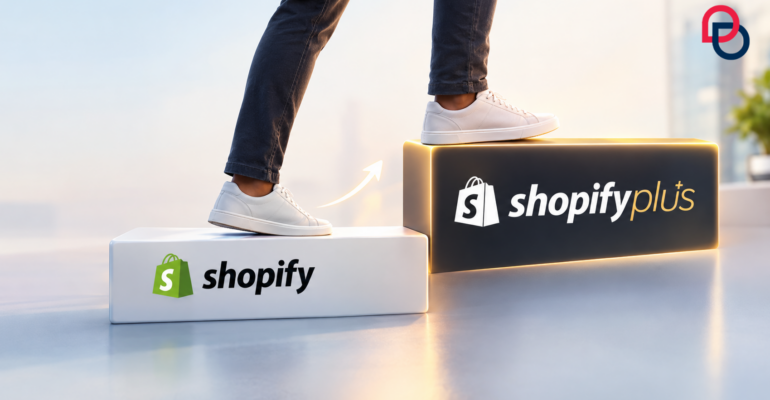
Shopify vs Shopify Plus: When Should a Growing Business Upgrade?
 Brainiuminfotech
 Choosing the right Shopify plan can become an important decision as an ecommerce business grows. Shopify provides a strong foundation for launching and running an online store, but businesses with increasing traffic, complex operations, multiple markets, or advanced customization may eventually start looking at Shopify Plus. The question is not simply whether Shopify Plus has more features. The more important question is whether your business has reached a point where those additional capabilities can solve real operational and growth challenges.
For many businesses, standard Shopify is more than enough to support a successful ecommerce operation. Shopify Plus is designed for businesses that have more complex requirements and need greater flexibility, automation, customization, and scalability. Understanding the difference between Shopify and Shopify Plus can help you determine whether upgrading is actually necessary or whether your current Shopify setup can continue supporting your growth.
What Is the Difference Between Shopify and Shopify Plus?
Shopify is an ecommerce platform that allows businesses to build, manage, and grow an online store without having to develop an entire ecommerce infrastructure from scratch. Depending on the plan, businesses get access to features for managing products, payments, orders, customers, inventory, analytics, marketing, and storefront customization. For startups, small businesses, and many growing brands, Shopify provides the infrastructure needed to operate an ecommerce business efficiently.
Shopify Plus is Shopify’s enterprise-focused offering. It provides the core capabilities businesses expect from Shopify while adding greater levels of customization, automation, operational control, and support for more complex ecommerce requirements. Shopify Plus is particularly relevant for established brands managing high-volume stores, multiple storefronts, international operations, wholesale channels, or complicated business workflows.
The key difference between Shopify and Shopify Plus is therefore not simply the number of features available. It is the level of control and scalability required by the business. A growing brand may remain perfectly comfortable on Shopify, while another business at a similar revenue level may need Shopify Plus because its operational complexity is much higher.
When Is Shopify Enough for Your Business?
For many ecommerce businesses, upgrading to Shopify Plus too early can add unnecessary complexity and cost. If your store has a manageable product catalogue, straightforward checkout requirements, a single primary storefront, and relatively simple business operations, standard Shopify may continue to meet your needs as you grow.
Shopify is also a strong option when your main priorities are launching quickly, maintaining a reliable ecommerce experience, integrating essential business tools, and improving your storefront over time. Businesses can extend Shopify through apps, custom development, APIs, and integrations without necessarily moving to Shopify Plus.
The important thing is to evaluate your actual business requirements rather than assuming that higher revenue automatically means you need Shopify Plus. Revenue is one factor, but operational complexity, international expansion, traffic patterns, customization requirements, automation needs, and internal processes can be equally important.
When Should a Growing Business Consider Shopify Plus?
A business should start evaluating Shopify Plus when its current Shopify setup is becoming a limitation rather than simply because the business is getting bigger. If your team is repeatedly looking for workarounds, manually handling processes that could be automated, or struggling to manage multiple stores and markets, Shopify Plus may provide the additional capabilities you need.
One common trigger is rapid growth across multiple markets. International ecommerce can introduce different currencies, languages, domains, pricing structures, tax requirements, payment methods, and customer experiences. Managing these requirements across multiple storefronts can become increasingly complex. Shopify Plus can provide a more structured approach for businesses operating multiple markets and storefronts.
Another reason businesses consider Shopify Plus is the need for deeper automation. As order volumes and operational complexity increase, manual processes can consume significant amounts of time. Businesses may need automated workflows for orders, customers, inventory, discounts, fulfilment, or other ecommerce operations. Shopify Plus provides additional tools and capabilities that can help businesses automate repetitive processes and create more sophisticated workflows.
Shopify vs Shopify Plus for High-Growth Ecommerce Stores
Growth changes the way an ecommerce business interacts with its technology. A store that works perfectly with a few hundred orders may require a different architecture when order volumes, product variants, integrations, and customer activity increase significantly.
This does not mean that standard Shopify cannot support large businesses. Shopify itself is designed to support ecommerce businesses at different stages of growth. The question is whether the existing setup provides the operational flexibility your business needs.
For high-growth businesses, Shopify Plus becomes particularly relevant when technology decisions start affecting business operations. For example, if marketing teams need greater control over promotions, operations teams need more automation, international teams need multiple storefronts, or developers need more advanced customization options, Shopify Plus can become a strategic platform decision rather than simply an upgrade.
Shopify Plus and Store Customization
Customization is another important consideration. Shopify allows businesses to customize their storefronts extensively through themes, apps, custom development, and integrations. However, enterprise businesses often have requirements that go beyond visual customization.
A growing business may need customized customer journeys, complex pricing structures, specialized checkout experiences, sophisticated integrations, or different experiences for different markets and customer segments. Shopify Plus can provide additional capabilities for businesses with these types of requirements.
However, it is important to remember that Shopify Plus is not automatically the solution to every customization problem. Sometimes the underlying issue is poor store architecture, inefficient third-party apps, outdated custom code, or an integration that was not designed for scale. Before upgrading, businesses should evaluate whether their existing Shopify architecture can be improved.
Shopify Plus for International Expansion
International expansion is one of the situations where the difference between a standard Shopify store and a more advanced ecommerce setup can become significant.
A business entering new countries may need localized storefronts, currencies, languages, payment methods, pricing, shipping rules, tax handling, and content. Managing these requirements through one increasingly complex store can become difficult, particularly when different markets require different business rules.
Shopify Plus can be valuable for businesses that need to manage multiple markets while maintaining greater control over their ecommerce operations. Instead of treating international expansion as simply adding more products or languages, businesses can build a more structured ecommerce architecture around their different markets.
Shopify Plus for B2B and Complex Ecommerce Operations
Another major reason businesses consider Shopify Plus is the need to support more complex selling models. A company may operate both direct-to-consumer and wholesale channels, or it may need different pricing, customer accounts, purchasing rules, or catalogues for business customers.
As B2B operations become more sophisticated, ecommerce requirements can become significantly different from those of a straightforward D2C store. Businesses may require customer-specific pricing, different purchasing processes, company accounts, payment terms, or integration with existing business systems.
In these situations, Shopify Plus can become part of a broader ecommerce architecture rather than simply being a more advanced version of a Shopify storefront.
Does Higher Revenue Mean You Need Shopify Plus?
Not necessarily. There is no single revenue number that automatically means a business should upgrade to Shopify Plus.
Two businesses generating similar revenue can have completely different technology requirements. One may operate a single market with a simple product catalogue and straightforward operations. Another may operate across several countries, manage multiple storefronts, have thousands of product variants, and rely on complex integrations.
The second business may have a stronger reason to consider Shopify Plus even if its revenue is similar to or lower than the first business.
This is why the decision should be based on business complexity, operational requirements, growth plans, and the limitations of the existing Shopify setup rather than revenue alone.
What Does Shopify Plus Cost?
Shopify Plus pricing is different from the standard Shopify subscription structure and is generally positioned for larger businesses with more advanced requirements. The total cost of moving to Shopify Plus should therefore not be evaluated only by comparing subscription prices.
Businesses should consider the broader technology investment, including development, integrations, apps, migration, maintenance, automation, international storefronts, and ongoing optimization. A Shopify Plus upgrade makes the most sense when the additional capabilities can create measurable operational or commercial value.
For example, reducing manual processes, improving conversion opportunities, supporting international expansion, simplifying multi-store management, or enabling new business models can potentially justify the investment. The relevant question is not simply “How much does Shopify Plus cost?” but “What business problem will Shopify Plus solve for us?”
Signs Your Shopify Store May Be Ready for Shopify Plus
A growing business may want to evaluate Shopify Plus when its ecommerce operations are becoming difficult to manage within its current setup. Frequent manual work, complex international operations, multiple storefronts, advanced B2B requirements, increasing integration complexity, or the need for greater automation can all be signals that it is time to evaluate the upgrade.
Another important sign is when your development team is repeatedly building workarounds around platform limitations. If custom requirements are becoming increasingly difficult to implement or maintaining the existing architecture is consuming significant development resources, it may be worth reviewing whether Shopify Plus can provide a better foundation.
However, businesses should distinguish between a genuine platform limitation and an architecture problem. A poorly structured Shopify store can become difficult to manage even when the platform itself is capable of supporting the business. A technical audit should therefore come before a platform migration decision.
Should You Upgrade to Shopify Plus or Optimize Your Existing Shopify Store?
This is often the most important question. Upgrading platforms is not always the first step toward solving a scaling problem.
If your current Shopify store is experiencing performance issues, complicated code, unnecessary apps, integration problems, or poor information architecture, improving the existing setup may solve the problem without requiring an upgrade.
On the other hand, if your business has outgrown the operational capabilities of its current Shopify setup, continuing to add workarounds can create technical debt and make future growth more difficult. In that situation, Shopify Plus may provide a more scalable foundation.
The right decision comes from identifying the specific constraint first and then determining whether better architecture, custom Shopify development, additional integrations, or Shopify Plus is the appropriate solution.
Shopify vs Shopify Plus: A Practical Decision Framework
The simplest way to approach the Shopify vs Shopify Plus decision is to look at where your business is today and where it needs to go next.
If you have a relatively straightforward ecommerce operation, one primary market, manageable order volumes, limited automation requirements, and no major platform limitations, Shopify may continue to be the right choice.
If you are managing multiple markets, multiple storefronts, complex B2B or D2C operations, high-volume workflows, sophisticated automation, or advanced integrations, Shopify Plus may be worth evaluating.
The decision should ultimately be based on business requirements rather than the perception that Shopify Plus is simply the “next level” of Shopify. The right platform is the one that supports your current operations while giving your business enough flexibility to achieve its next stage of growth.
How a Shopify Development Partner Can Help
Deciding between Shopify and Shopify Plus is not only a platform decision. It is also an architecture decision. A Shopify development partner can assess your existing store, identify technical and operational bottlenecks, review integrations and customizations, and determine whether the business actually needs Shopify Plus.
A technical assessment can also help identify opportunities to improve your existing Shopify architecture before committing to a migration. If an upgrade is appropriate, the development partner can help plan the migration, rebuild custom functionality, integrate business systems, structure multiple storefronts, and optimize the new Shopify Plus environment.
At Brainium, we help businesses approach Shopify growth from both the business and technology perspective. Whether the requirement is Shopify development, store optimization, custom integrations, or Shopify Plus implementation, the objective is to build an ecommerce architecture that can support the next stage of the business.
Final Thoughts
Shopify is capable of supporting a wide range of growing ecommerce businesses, and moving to Shopify Plus should not be treated as an automatic milestone. The right time to upgrade is when your business requirements have become more complex than your current setup can efficiently support.
If your business is expanding internationally, managing multiple storefronts, increasing automation, entering B2B ecommerce, handling complex integrations, or requiring greater control over its ecommerce operations, Shopify Plus may be worth evaluating.
Before making the decision, look beyond revenue and ask a more useful question: Is our current Shopify architecture helping us scale, or is it becoming a constraint?
That answer can tell you whether you need Shopify Plus—or whether your existing Shopify store simply needs a better architecture.